
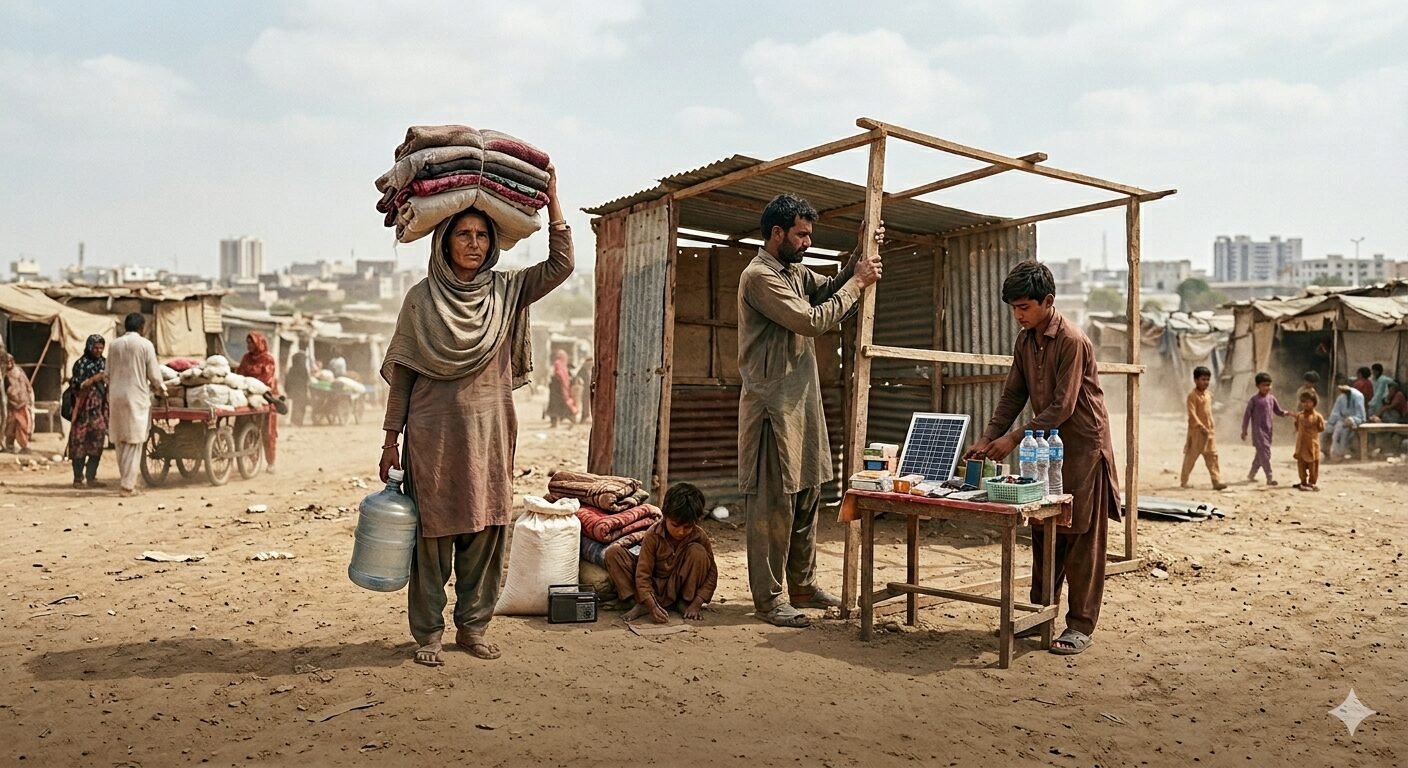
Climate Migration in Pakistan is changing how people work, earn, and survive. Across cities and rural areas, more people are turning to freelancing, side hustles, and small home businesses as traditional jobs become harder to rely on.
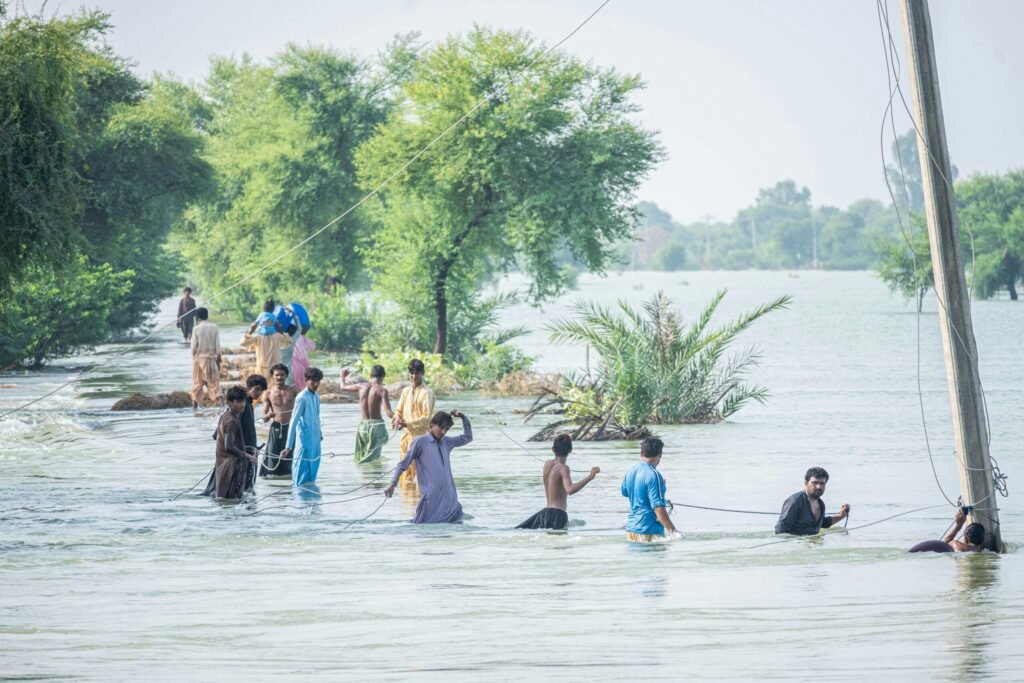
Pakistan’s Economy has faced rising inflation, unemployment, and financial instability in recent years. At the same time, Climate pressures such as floods, heatwaves, and water shortages are disrupting livelihoods, especially in agriculture and rural communities.
According to global economic reports and labor studies, informal work now makes up a major part of Pakistan’s workforce. Research from policy institutes also shows that the informal Economy in Pakistan continues to expand as people search for flexible and immediate sources of income.
As a result, many Pakistanis are no longer waiting for stable corporate jobs. Instead, they are building their own ways to survive.
Climate Migration in Pakistan and the Shift in Work
Climate Migration in Pakistan is not only about people moving from one place to another. It is also changing how people earn money.
When floods damage farms or droughts reduce agricultural income, families often move toward urban areas. However, cities are already struggling with unemployment and rising living costs.
Because of this, many people enter the informal Economy instead.
Some begin freelancing online. Others start food businesses, online stores, or delivery work. In many cases, these small businesses begin from home with little Investment in Pakistan. Online earning in Pakistan has also become a major source of income for young people looking for flexible work opportunities.
This shift is especially visible among young people. Many now prefer flexible digital work over traditional employment.
Research on Pakistan’s gig Economy also shows that freelancing has become an important survival strategy for thousands of people.
Climate Migration in Pakistan and the Rise of Informal Businesses
As Climate pressures increase, informal businesses are growing rapidly across Pakistan.
For many families, survival now depends on multiple income streams instead of one stable salary.
Common examples include:
- freelancing and remote work
- online clothing and thrift stores
- home-based food businesses
- ride-hailing and delivery services
- digital marketing and content creation
- tutoring and online teaching
- small Real estate services
- Land buying and reselling in developing areas
- social media based businesses
- repair and maintenance services
- IT and digital agencies

Many people see these businesses as safer than relying only on formal employment.
At the same time, Real estate and Land remain important areas of Investment in Pakistan. During economic uncertainty, people often turn toward property as a long term asset.
However, Climate risks are now affecting this sector too. Flood-prone areas and water shortages are changing where people choose to live and invest.
How Pakistan’s Economy Is Adapting
Pakistan’s Economy is slowly adapting to this new reality. However, challenges still remain.
The informal sector creates opportunities, but it also lacks stability and protection.
Many workers have no job security, healthcare, or financial safety nets.
At the same time, digital work has created new possibilities. Young Pakistanis are using freelancing platforms, social media, and online marketplaces to reach global clients.
This change reflects something bigger. People are no longer depending entirely on traditional systems. Instead, they are creating their own economic pathways.
Climate Migration in Pakistan is also reshaping cities, housing demand, and local businesses. Areas receiving large numbers of migrants often experience pressure on infrastructure, Real estate, and public services.
As these shifts continue, businesses and policymakers may need to rethink how work, housing, and economic support systems function in the future.
The rise of freelancing, online earning in Pakistan, and small businesses shows how quickly people are adapting to economic and Climate challenges.
At the same time, the growing demand for flexible work is changing how younger generations view stability and career growth.
Looking Ahead
Pakistan is entering a period of major economic and social transformation. Climate pressures, rising living costs, and changing work patterns are reshaping everyday life.
For many people, the informal Economy is no longer temporary. It has become a long term survival strategy.
This shift also presents new opportunities. Digital work, freelancing, and small scale entrepreneurship are opening doors for people who once had limited options.
However, long term progress will depend on stronger infrastructure, better economic planning, and support for workers operating outside traditional systems.
Climate Migration in Pakistan is expected to continue influencing cities, Real estate trends, Land demand, and Investment in Pakistan in the coming years.
Understanding these changes is important because they are shaping the future of Pakistan’s Economy in real time.


