
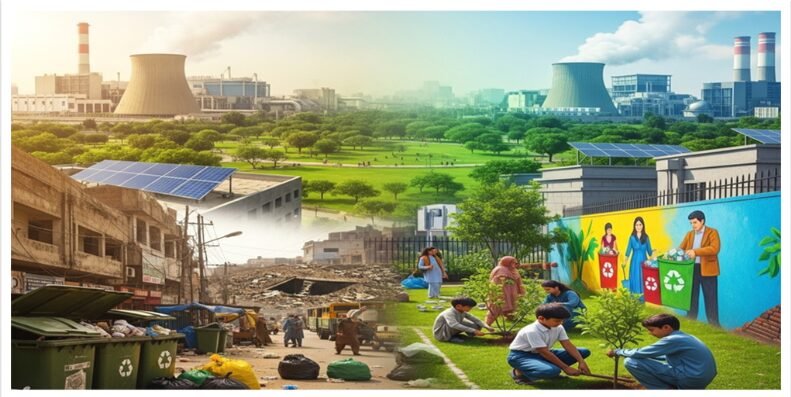
Introduction
Waste management in Pakistan has become one of the most pressing environmental challenges of the 21st century. With rapid urbanization, population growth, and industrial expansion, the country is generating millions of tons of solid waste every year. Unfortunately, poor collection systems, lack of recycling infrastructure, and limited public awareness have turned this into a national crisis. However, with the right strategies, policies, and community involvement, Pakistan can move toward a greener and cleaner future.
Current Waste Management Situation in Pakistan
Pakistan produces approximately 48 million tons of solid waste annually, and this number is increasing by nearly 2% each year. Major cities like Karachi, Lahore, Islamabad, and Faisalabad face severe challenges in waste collection and disposal. Most of the waste is dumped in open landfills or vacant areas, posing serious threats to public health, air quality, and water systems.
- Karachi alone generates around 12,000 tons of garbage daily, of which a significant portion remains uncollected.
- Lahore and Rawalpindi are struggling with insufficient recycling facilities and inefficient collection systems.
This lack of sustainable waste management contributes to pollution, flooding, and the spread of diseases — issues that can no longer be ignored.
Major Challenges in Pakistan’s Waste Management System
- Lack of Infrastructure:
Most municipalities do not have proper waste segregation, collection, and recycling systems. - Limited Recycling Awareness:
Only a small portion of the population practices waste separation at the household level. - Open Dumping and Burning:
A large percentage of waste is openly burned, releasing toxic gases and contributing to climate change. - Informal Waste Sector:
Thousands of informal waste pickers work under unsafe conditions without proper regulation or support. - Weak Policy Implementation:
Although environmental laws exist, enforcement remains poor due to lack of resources and coordination.
How Pakistan Can Move Toward a Greener Future
To transform waste management and move toward sustainability, Pakistan needs a comprehensive and multi-level approach. Here are several key strategies:
1. Promoting Waste Segregation at Source
Encouraging households and businesses to separate organic waste, recyclables, and non-recyclables can significantly reduce landfill pressure. Municipalities should introduce color-coded bins and awareness campaigns.
2. Investing in Recycling Infrastructure
Public-private partnerships can help establish modern recycling plants and composting facilities. This will not only reduce waste but also create green jobs and support the circular economy.
3. Encouraging Zero-Waste Practices
From banning single-use plastics to promoting reusable packaging, Pakistan must embrace zero-waste initiatives. Educational institutions and corporations can lead by example.
4. Strengthening Legislation and Enforcement
Stricter implementation of waste disposal laws and fines for illegal dumping can ensure accountability. The Pakistan Environmental Protection Agency (Pak-EPA) should enhance monitoring and reporting systems.
5. Leveraging Technology and Innovation
Digital waste tracking systems, smart bins, and AI-based recycling solutions can revolutionize the sector. Startups and innovators can play a crucial role in introducing tech-driven waste management models.
6. Community Participation and Education
Sustainable waste management begins with people. Awareness campaigns, school programs, and community clean-up drives can foster a culture of environmental responsibility.
The Role of Government and Private Sector
The government must take the lead by formulating a National Waste Management Policy that emphasizes sustainability, recycling, and resource recovery. Simultaneously, the private sector can invest in eco-friendly technologies and corporate social responsibility (CSR) programs focused on environmental protection.
Municipal authorities should collaborate with NGOs and international organizations to adopt best practices from countries like Turkey, Malaysia, and Sweden, where waste is viewed as a resource, not a problem.
Conclusion Effective waste management is no longer a choice — it is a necessity for Pakistan’s sustainable future. By promoting recycling, improving infrastructure, enforcing regulations, and engaging communities, Pakistan can significantly reduce its environmental footprint. A cleaner, greener Pakistan is achievable if every citizen, corporation, and policymaker takes responsibility today.


