
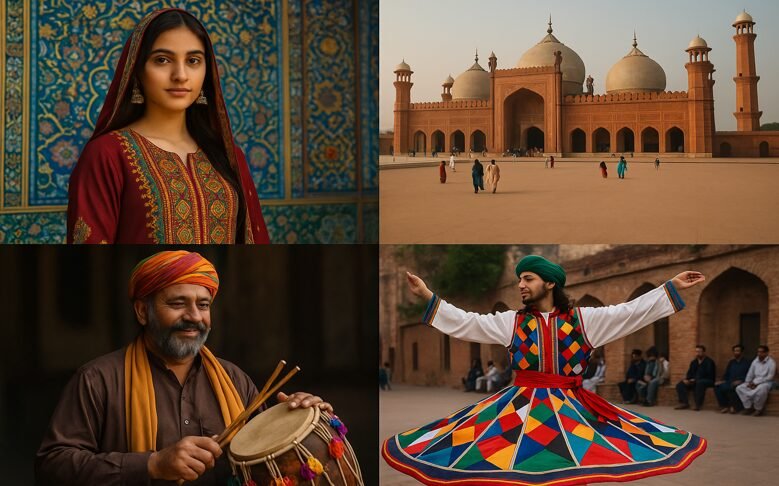
Pakistan a land of breathtaking diversity, rich history, and vibrant traditions stands as a living mosaic of colors, customs, and cultures. From the northern valleys of Hunza to the deserts of Thar, every corner of this nation tells a story painted in hues of heritage and pride. This article explores the colors of Pakistan, offering a journey through its culture, traditions, and timeless beauty all while embracing the spirit of unity in diversity.
A Cultural Kaleidoscope: The Soul of Pakistan
The essence of Pakistan lies in its cultural richness a blend of influences from Persian, Central Asian, Arab, and South Asian civilizations. Each province Punjab, Sindh, Balochistan, Khyber Pakhtunkhwa, and Gilgit-Baltistan contributes its own unique flavor to the national identity.
Traditional festivals like Eid-ul-Fitr, Eid-ul-Adha, Basant, and Shandur Polo Festival reflect the joyous spirit and deep-rooted traditions of the Pakistani people. These celebrations are filled with music, food, laughter, and vibrant attire truly representing the colors of Pakistan.
Traditional Attire: The Threads of Identity
Clothing in Pakistan is not merely about fashion; it is a symbol of heritage. The shalwar kameez, adorned with intricate embroidery and regional patterns, is worn nationwide, but each area adds its own touch.
- In Sindh, the ajrak and topi (cap) are cultural emblems.
- Punjab showcases bright phulkari designs and festive dresses.
- Balochistan features mirror work and heavy embroidery.
- Khyber Pakhtunkhwa highlights simplicity with grace.
These traditional outfits bring out the vibrant spirit of the country, symbolizing pride, modesty, and identity.
Art and Handicrafts: Crafting Heritage with Color
Pakistan’s artistry is a reflection of its cultural depth. Truck art, with its eye-catching designs and bold colors, is perhaps the most iconic representation of Pakistani creativity. Similarly, blue pottery of Multan, handwoven carpets from Balochistan, mirror embroidery from Sindh, and Peshawari chappal stand as testaments to the nation’s skilled craftsmanship.
These art forms not only preserve the past but also create economic opportunities, empowering local artisans and bringing Pakistan’s culture to global markets.
Music and Dance: The Rhythm of Tradition
Pakistani music carries the rhythm of its soul. From the Qawwali of Nusrat Fateh Ali Khan to the folk tunes of Sindh and Punjab, music transcends regional and linguistic boundaries. Traditional dances like Attan, Bhangra, and Ho Jamalo express joy, unity, and the collective spirit of celebration — painting Pakistan in the melodies of cultural pride.
Cuisine: A Flavorful Expression of Heritage
Pakistani cuisine is another form of cultural expression, bursting with color and flavor. Dishes like biryani, haleem, chapli kebab, and sajji vary across regions but share one trait — warmth and hospitality. The colorful use of spices mirrors the diversity of Pakistan’s people, offering a sensory experience that connects generations.
Festivals and Celebrations: The Joy of Togetherness
From religious festivals to seasonal fairs, Pakistan’s celebrations reflect its unity and shared values. Independence Day brings the green and white colors of the national flag to every home and street, symbolizing faith, discipline, and unity. Meanwhile, Basant, celebrated with vibrant kites, fills the skies with color, marking the arrival of spring and the renewal of hope.
Conclusion: A Living Canvas of Culture
The colors of Pakistan are not confined to its landscapes or fabrics — they live in its people, traditions, and spirit. Every dance, dish, song, and design reflects the beauty of coexistence and cultural harmony. Pakistan’s culture is a masterpiece in motion — ever-evolving, ever-inspiring, and eternally colorful.


