
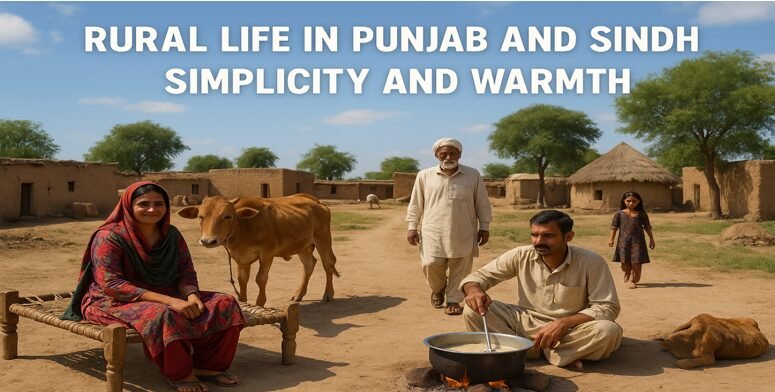
Rural life in Punjab and Sindh carries a charm that is timeless, peaceful, and deeply rooted in centuries of tradition. These regions represent the cultural heart of Pakistan, where life moves at a slower pace, communities live in harmony, and values of hospitality, hard work, and togetherness remain at the center of daily living. With fertile lands, vibrant traditions, and warm-hearted people, the rural landscapes of Punjab and Sindh offer an authentic window into the soul of Pakistan.
1. Introduction: The Heartbeat of Pakistan’s Countryside
Rural areas of Punjab and Sindh form the backbone of Pakistan’s agricultural economy and cultural identity. Though modern development is rapidly transforming cities, villages across these provinces continue to preserve traditions, community bonds, and a lifestyle that values simplicity over materialism.
Both regions share similarities—farming culture, strong family systems, and warm hospitality—yet each maintains its unique flavor, language, and heritage.
2. Rural Life in Punjab: Culture, Warmth, and Agricultural Strength
2.1 The Land of Fertility and Abundance
Punjab is known as the “Land of Five Rivers,” and its villages reflect lush green fields, abundant harvests, and hardworking farmers who dedicate their lives to agriculture. Crops such as wheat, sugarcane, rice, cotton, and maize dominate the rural landscape.
SEO Keywords: rural Punjab, Punjabi villages, agriculture in Punjab, Punjab farming traditions
2.2 Daily Life and Community Bonds
In rural Punjab, life begins early. Farmers leave for fields before sunrise, women prepare homemade breakfast, and children attend local schools or help with household responsibilities.
The village lifestyle emphasizes collective harmony. Neighbors help one another, celebrations are communal, and elders hold respected positions in family and village matters.
2.3 Cultural Traditions of Punjab’s Villages
Punjabi rural life is vibrant with traditions such as:
- Basant — kite-flying festival
- Mehndi and Dholki gatherings
- Bhangra and Gidda dance
- Traditional Punjabi foods like makai di roti, sarson da saag, and lassi
These traditions keep the spirit of Punjab alive and joyful.
3. Rural Life in Sindh: Heritage, Peace, and Cultural Pride
3.1 The Land of Rivers and Desert Beauty
Sindh’s rural landscape is diverse—from the Indus River belt to the Thar Desert. Agriculture is strong here as well, with crops such as sugarcane, cotton, rice, dates, and millet.
SEO Keywords: rural Sindh, Sindh agriculture, Sindhi heritage, Sindh villages
3.2 Sindhi Hospitality and Community Life
Sindhi village life is known for its calmness and warmth. The people value mehmaan-nawazi (hospitality). Guests are welcomed with open hearts, and sharing meals is considered a blessing.
Mud houses, open courtyards, and charpais (woven beds) reflect the simplicity of their lifestyle.
3.3 Rich Culture and Ancient Traditions
Sindh is home to some of the most ancient civilizations including Mohenjo-Daro. This historic richness reflects in today’s rural traditions:
- Sindhi Ajrak and Topi
- Folk music with Yaktara and Alghoza
- Culturally rich weddings and melas
- Traditional foods like Sai Bhaji and Sindhi Biryani
4. Shared Traits of Rural Punjab and Sindh
While each region has its distinct identity, there are striking similarities in the values and lifestyle of their rural communities:
4.1 Strong Family Values
Joint families are common. Grandparents, cousins, and siblings all live together under one roof, reflecting unity and emotional support.
4.2 Deep Connection With Land
Generations depend on farming, livestock, and handmade crafts, making agriculture a way of life rather than just a profession.
4.3 Hospitality and Warmth
Villagers in both provinces are known for their genuine friendliness. Offering chai, lassi, or a full meal is considered a gesture of honor.
4.4 Peaceful and Slow-Paced Living
Life in the countryside moves at a slower rhythm, free from the rush and noise of urban centers.
5. The Cultural Significance of Rural Life
Rural communities in Pakistan uphold:
- Traditional wisdom and folk stories
- Ethical values passed through generations
- Craftsmanship such as embroidery, pottery, and weaving
- Local festivals that reflect heritage and spirituality
These elements play a vital role in preserving Pakistan’s identity.
6. Challenges Faced by Rural Communities
While rural life is rich in culture, there are challenges:
- Limited access to healthcare
- Educational gaps
- Water and sanitation issues
- Lack of modern infrastructure
- Climate change affecting agriculture
Though progress is ongoing, development remains uneven.
7. The Timeless Charm and Future of Rural Life
Despite modernization and rapid urbanization, rural Punjab and Sindh maintain an enduring simplicity and warmth. Their beauty lies in:
- Strong human connections
- Respect for traditions
- Natural landscapes
- Sincere hospitality
As Pakistan progresses, preserving these rural values becomes essential for maintaining cultural balance and identity.
Conclusion
Rural life in Punjab and Sindh reflects the true essence of Pakistan—simple, warm, and deeply cultural. From lush fields to ancient traditions, and from shared meals to joyful festivals, these communities offer a world where life is meaningful, connected, and peaceful.
Whether it is the lively spirit of Punjab or the soulful calm of Sindh, both regions highlight a heritage that continues to define Pakistan’s national character.


