
Introduction
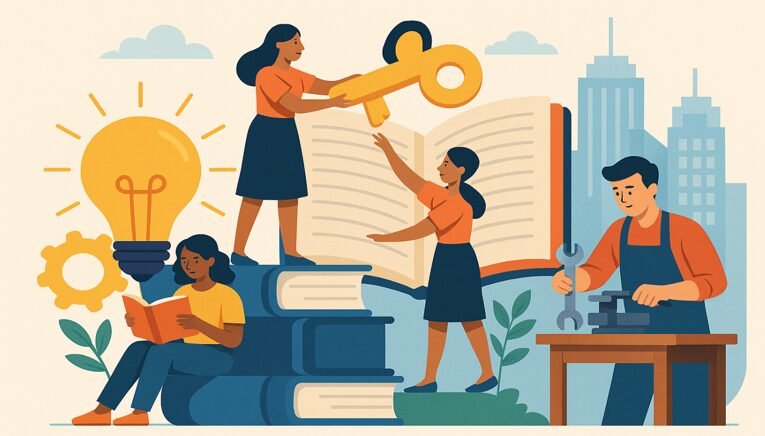
In today’s knowledge-driven world, literacy and skill development stand as the twin pillars of sustainable national progress. A literate and skilled population forms the backbone of a nation’s economy, fostering innovation, productivity, and social development. For a country like Pakistan, investing in education and vocational training is not merely a necessity—it is a strategic imperative for future growth and prosperity.
The Importance of Literacy in National Development
Literacy is far more than the ability to read and write—it empowers individuals to think critically, communicate effectively, and contribute meaningfully to society. Countries with high literacy rates consistently show stronger economic performance and lower poverty levels.
In Pakistan, improving literacy can:
- Enhance employment opportunities by equipping citizens with essential knowledge.
- Promote civic participation and social harmony.
- Support gender equality by empowering women through education.
- Strengthen democracy by creating an informed and aware citizenry.
When literacy becomes accessible to all, it fuels national cohesion and helps bridge social and economic divides.
Skill Development: Building a Workforce for the Future
While literacy lays the foundation, skill development provides the tools for practical success. In an age of rapid technological change, traditional education alone is not enough. Developing market-oriented skills—such as digital literacy, entrepreneurship, and technical training—ensures that the workforce remains competitive both nationally and globally.
For Pakistan, skill development can transform its demographic advantage into an economic asset. The country’s youth population, if trained effectively, can contribute to industries such as:
- Information Technology (IT) and freelancing
- Renewable energy and sustainable manufacturing
- Construction and infrastructure development
- Agriculture and agribusiness innovation
Government and private sector initiatives like NAVTTC (National Vocational & Technical Training Commission) and Prime Minister’s Youth Skills Program are vital steps toward empowering young people with employable skills.
The Link Between Literacy, Skills, and Economic Growth
A direct correlation exists between literacy, skills, and economic development. Nations that invest in both education and vocational training enjoy higher GDP growth, lower unemployment rates, and stronger global competitiveness.
For example:
- Literate individuals adapt more easily to new technologies.
- Skilled workers attract foreign investment by boosting industrial efficiency.
- Educated citizens make informed financial and social decisions, reducing poverty and inequality.
By merging literacy with skill development, Pakistan can create a knowledge-based economy that thrives on innovation and self-reliance.
Challenges and the Way Forward
Despite progress, Pakistan still faces challenges such as inadequate educational infrastructure, limited access to vocational institutions, and gender disparities in literacy. To overcome these barriers, the government must:
- Increase budget allocation for education and technical training.
- Promote public-private partnerships in vocational sectors.
- Encourage community-based literacy programs.
- Focus on digital education and e-learning platforms to reach remote areas.
Empowering both urban and rural populations with literacy and skills will ensure inclusive and sustainable national growth.
Conclusion
In conclusion, literacy and skill development are not just educational goals—they are powerful instruments for transforming a nation’s future. For Pakistan to achieve long-term prosperity, it must prioritize educating its people and equipping them with relevant, future-ready skills. A literate and skilled Pakistan will not only strengthen its economy but also uplift society, enhance innovation, and pave the way for a more equitable and progressive nation.


