
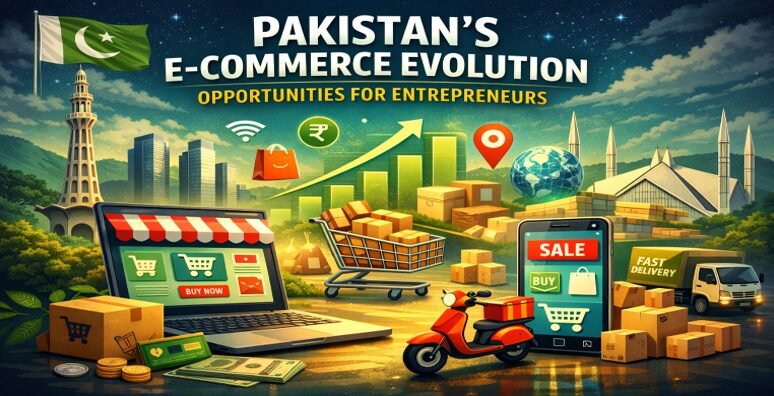
Pakistan’s e-commerce sector has undergone a remarkable transformation over the past decade. What began as a niche market serving a limited urban audience has now grown into a dynamic digital economy, creating significant opportunities for entrepreneurs across the country. With increasing internet penetration, widespread smartphone usage, and a young, tech-savvy population, Pakistan is steadily positioning itself as one of South Asia’s most promising e-commerce markets.
The Growth of E-commerce in Pakistan
E-commerce in Pakistan has expanded rapidly due to improved digital infrastructure and changing consumer behavior. Affordable smartphones and better access to mobile internet have enabled millions of Pakistanis to shop online for the first time. Major cities such as Karachi, Lahore, and Islamabad initially led this shift, but smaller cities and semi-urban areas are now contributing strongly to online sales growth.
The COVID-19 pandemic further accelerated this trend, as consumers and businesses turned to digital platforms for safety and convenience. Today, online marketplaces, social commerce, and brand-owned websites are becoming an essential part of Pakistan’s retail landscape.
Key Drivers Behind the E-commerce Boom
Several factors have fueled Pakistan’s e-commerce evolution:
- Young Population: A large percentage of Pakistan’s population is under 30, making it highly receptive to digital platforms and online shopping.
- Mobile-First Economy: Most consumers access e-commerce platforms through smartphones, encouraging mobile-optimized stores and social media selling.
- Digital Payments Growth: While cash-on-delivery still dominates, digital wallets, mobile banking, and fintech solutions are steadily increasing trust in online transactions.
- Logistics and Delivery Improvements: Courier services and last-mile delivery networks have expanded, enabling faster and more reliable order fulfillment.
Emerging Opportunities for Entrepreneurs
Pakistan’s evolving e-commerce ecosystem offers diverse opportunities for new and existing entrepreneurs.
1. Niche Online Stores
Instead of competing with large marketplaces, entrepreneurs can succeed by focusing on niche products such as organic skincare, handmade crafts, modest fashion, or locally produced goods. Consumers increasingly value quality, authenticity, and storytelling.
2. Social Commerce
Platforms like Facebook, Instagram, and TikTok have become powerful sales channels. Many small businesses in Pakistan now operate entirely through social media, reducing startup costs while directly engaging with customers.
3. Digital Services and Support Businesses
E-commerce growth has created demand for related services such as digital marketing, content creation, website development, customer support, and order fulfillment solutions.
4. Cross-Border E-commerce
Entrepreneurs can tap into international markets by selling Pakistani products—such as textiles, handicrafts, and leather goods—to overseas customers, especially the Pakistani diaspora.
Challenges Entrepreneurs Must Navigate
Despite its potential, Pakistan’s e-commerce sector faces challenges. These include limited trust in online payments, inconsistent logistics in remote areas, and regulatory uncertainties. However, entrepreneurs who focus on transparency, customer service, and reliable delivery can build long-term credibility and overcome these barriers.
The Future of E-commerce in Pakistan
The future of e-commerce in Pakistan appears promising. As digital payment systems mature and internet access continues to expand, online shopping is expected to become more mainstream. Government initiatives supporting digital transformation and entrepreneurship may further strengthen the ecosystem.
For entrepreneurs, now is an ideal time to enter the market. Those who innovate, understand local consumer needs, and adopt scalable digital strategies can benefit greatly from Pakistan’s ongoing e-commerce evolution.
Conclusion
Pakistan’s e-commerce journey reflects a broader shift toward digital entrepreneurship and economic modernization. With low entry barriers, a growing online consumer base, and increasing technological adoption, the sector offers substantial opportunities for ambitious entrepreneurs. By leveraging innovation, trust, and customer-centric approaches, businesses can not only thrive but also contribute to shaping Pakistan’s digital future.


