
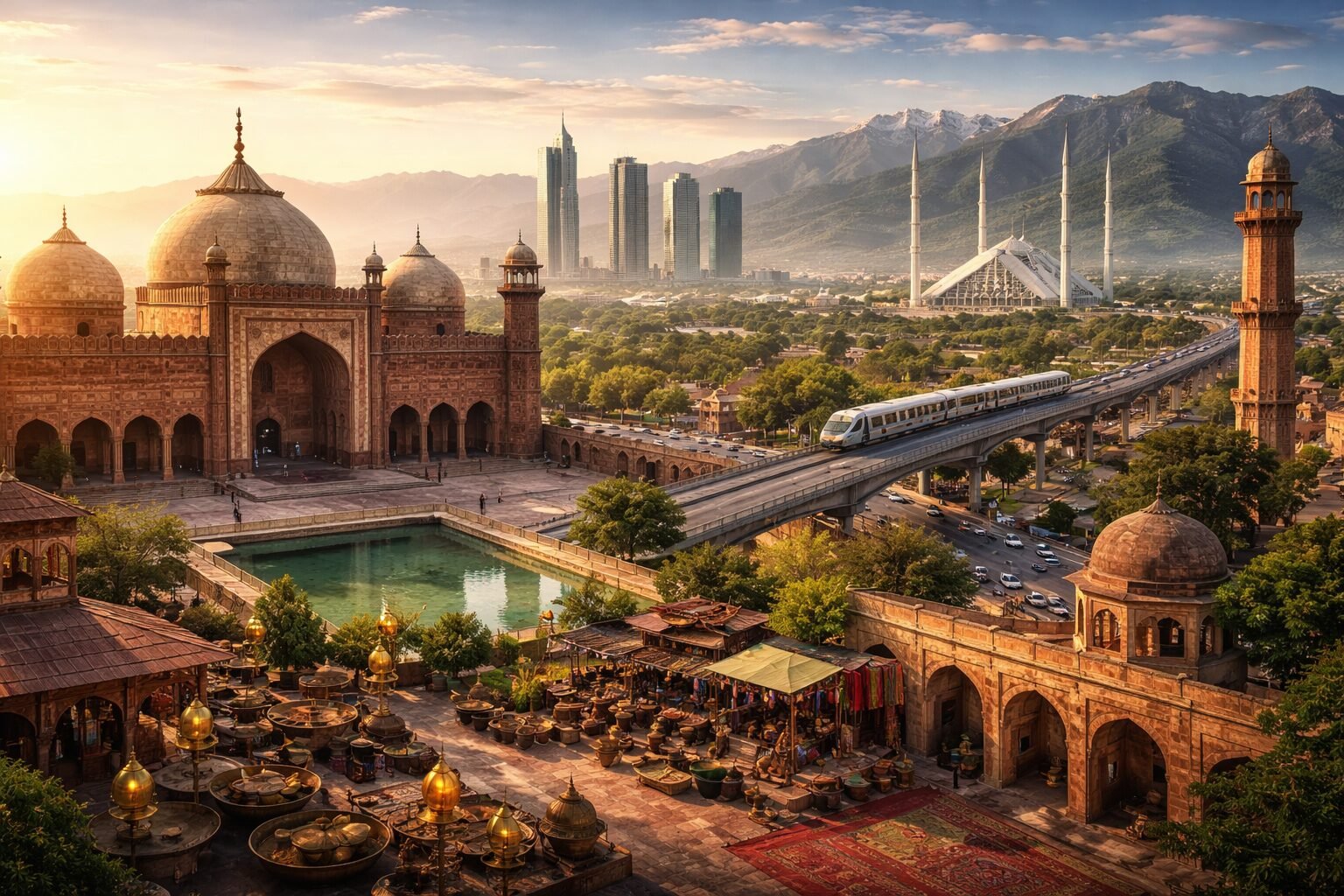
Pakistan is a country where centuries-old traditions coexist with rapidly evolving modern ambitions. From historic mosques and bustling bazaars to tech startups and global fashion trends, Pakistan presents a unique cultural balance that reflects both deep-rooted heritage and forward-looking aspirations. This blend defines the nation’s identity and shapes its social, economic, and cultural landscape.
A Civilizational Legacy That Still Lives On
Pakistan’s cultural foundation is built on one of the world’s oldest civilizations—the Indus Valley Civilization. Cities like Mohenjo-daro and Harappa stand as reminders of advanced urban planning that dates back thousands of years. Over time, Islamic, Persian, Central Asian, and South Asian influences further enriched local traditions, creating a diverse cultural fabric.
Traditional values such as respect for elders, strong family bonds, hospitality, and community support remain central to daily life. Festivals like Eid, weddings filled with age-old rituals, and regional customs continue to be practiced with pride across the country.
Modern Education and a Youth-Driven Society
With over 60% of its population under the age of 30, Pakistan is increasingly shaped by its youth. Modern education, digital access, and exposure to global ideas are influencing how young Pakistanis think, work, and express themselves. Universities, online learning platforms, and international collaborations are opening new pathways in science, technology, arts, and entrepreneurship.
At the same time, many young people continue to value cultural norms, religious practices, and family traditions, creating a balance rather than a complete shift away from the past.
Fashion, Media, and Cultural Evolution
Pakistan’s fashion industry is a strong example of tradition meeting modernity. Designers blend traditional fabrics like khaddar, silk, and lawn with contemporary cuts and international trends. Traditional attire such as shalwar kameez remains widely worn, yet it is constantly reinvented to suit modern tastes.
Similarly, Pakistani media—films, dramas, and digital content—often explores modern themes such as women’s empowerment, mental health, and social change, while remaining grounded in cultural values and societal realities.
Technology and Economic Aspirations
Urban centers such as Karachi, Lahore, and Islamabad are witnessing rapid growth in technology, freelancing, and startup culture. Pakistan’s IT sector, e-commerce platforms, and digital payment systems reflect the country’s desire to compete in the global economy.
Despite this progress, traditional markets, crafts, and small family businesses continue to thrive. Artisans preserve skills passed down through generations, while modern platforms now help them reach international audiences.
Religion, Values, and Progressive Change
Religion plays a significant role in Pakistani society, guiding moral values and daily routines. Rather than disappearing in the face of modernization, religious and cultural principles often adapt to new contexts. For many Pakistanis, modern aspirations such as career growth, education for women, and global engagement coexist with faith-based values and ethical frameworks.
This balance allows change to occur gradually, without a complete break from cultural identity.
The Ongoing Balance Between Past and Future
Pakistan’s journey is not about choosing between tradition and modernity, but about integrating both. Ancient customs provide a sense of belonging and continuity, while modern aspirations drive innovation and progress. This dynamic balance enables Pakistan to move forward while staying connected to its historical roots.
Conclusion
Pakistan’s ability to balance ancient traditions with modern aspirations is one of its greatest strengths. The country’s evolving identity reflects resilience, adaptability, and cultural pride. As Pakistan continues to grow and modernize, its rich heritage remains a guiding force—ensuring that progress does not come at the cost of tradition, but alongside it.


