
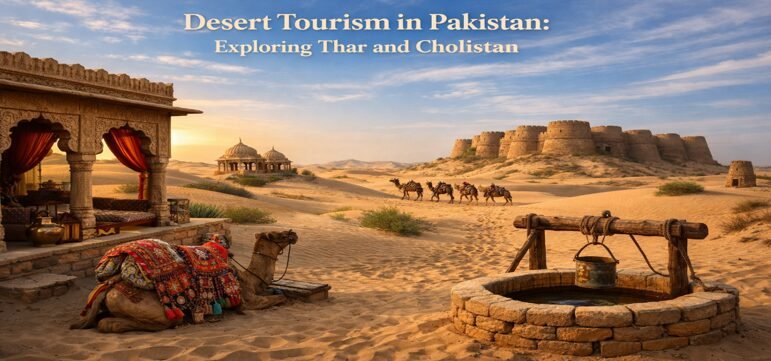
Pakistan is often celebrated for its mountains, rivers, and lush valleys, yet its deserts tell equally powerful stories of resilience, culture, and timeless beauty. Desert tourism in Pakistan is steadily gaining attention, especially in the vast landscapes of Thar and Cholistan. These deserts offer a unique blend of natural wonders, rich traditions, and unforgettable experiences for travelers seeking something beyond conventional tourism.
The Thar Desert: Colors, Culture, and Community
The Thar Desert, stretching across Sindh and into India, is one of the most vibrant deserts in the world. Unlike the barren image often associated with deserts, Thar is alive with color, music, and strong community bonds.
Small villages made of mud houses, adorned with intricate mirror work, reflect centuries-old architectural wisdom. The people of Thar are known for their hospitality, traditional attire, and folk music that echoes across the dunes at night. Events such as the Thar Desert Festival showcase local crafts, camel races, and cultural performances, attracting both domestic and international tourists.
From a tourism perspective, Thar offers:
- Camel safaris across golden sand dunes
- Cultural immersion in local villages
- Traditional Sindhi cuisine
- Handcrafted jewelry and textiles
These experiences make Thar Desert tourism an authentic and human-centered journey rather than just a sightseeing trip.
The Cholistan Desert: History Written in Sand
Located in southern Punjab, the Cholistan Desert is a land where history and mystery merge. Once part of the ancient Hakra River civilization, Cholistan holds the remains of over 400 archaeological sites, including the majestic Derawar Fort.
Cholistan is best known for the Cholistan Jeep Rally, a high-energy motorsport event that draws adventure enthusiasts from around the world. Beyond the rally, the desert offers serene landscapes, star-filled skies, and a deep sense of historical continuity.
Key attractions in Cholistan include:
- Derawar Fort and surrounding forts
- Traditional nomadic lifestyles
- Desert wildlife and migratory birds
- Off-road adventures and desert camping
For travelers interested in heritage tourism, Cholistan provides a rare opportunity to explore Pakistan’s ancient past in an untouched setting.
Eco-Tourism and Sustainable Opportunities
Desert tourism in Pakistan holds strong potential for eco-tourism and sustainable development. Responsible tourism can help improve local livelihoods while preserving fragile desert ecosystems. Community-based tourism initiatives, renewable energy projects, and eco-friendly accommodations can transform Thar and Cholistan into models of sustainable travel.
Promoting desert tourism also helps challenge stereotypes, showing the world a softer, culturally rich side of Pakistan that is deeply rooted in tradition and environmental harmony.
Why Desert Tourism Matters for Pakistan
Investing in desert tourism diversifies Pakistan’s travel industry and highlights regions that are often overlooked. It encourages cultural preservation, supports rural economies, and offers travelers meaningful, immersive experiences.
As global tourists increasingly seek authentic and off-the-beaten-path destinations, Thar and Cholistan deserts stand as powerful symbols of Pakistan’s hidden beauty and cultural depth.
Conclusion
Desert tourism in Pakistan is more than an exploration of sand and sky; it is a journey into history, humanity, and heritage. The Thar and Cholistan deserts invite travelers to slow down, connect with nature, and experience the enduring spirit of the people who call these landscapes home. With thoughtful promotion and sustainable practices, these deserts can become iconic destinations on the global tourism map.


