
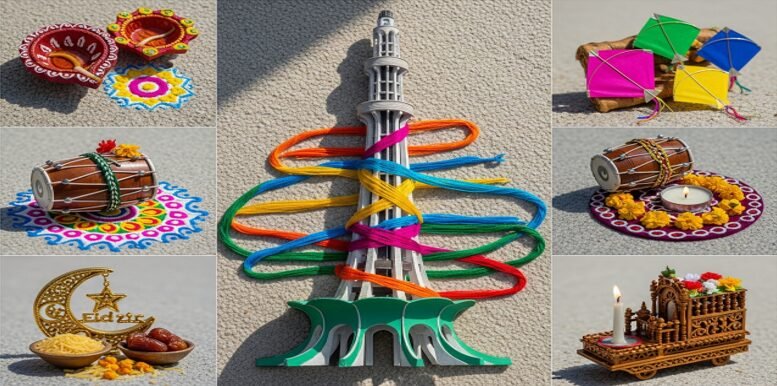
Pakistan is a country rich in cultural heritage, shaped by centuries of history, diverse ethnic communities, and deep-rooted traditions. One of the most vivid ways this diversity comes to life is through festivals. From religious celebrations to regional and seasonal events, Pakistan’s festivals beautifully reflect unity in diversity, bringing people together beyond language, ethnicity, and region.
A Tapestry of Religious Festivals
Religious festivals play a central role in Pakistani society. Eid-ul-Fitr and Eid-ul-Adha are celebrated nationwide, uniting Muslims through shared prayers, charity, and family gatherings. Regardless of whether one lives in a bustling city or a remote village, the spirit of Eid remains the same—gratitude, generosity, and togetherness.
At the same time, Pakistan’s minority communities openly celebrate their own religious festivals. Christmas, Easter, Diwali, Holi, and Vaisakhi are observed by Christian, Hindu, and Sikh communities with enthusiasm and pride. These celebrations highlight Pakistan’s multicultural identity and the country’s long-standing tradition of religious coexistence.
Regional Festivals and Cultural Identity
Each province of Pakistan adds its unique colors to the national cultural landscape. In Punjab, Basant symbolizes joy and renewal through kite flying. Sindh celebrates Sindhi Cultural Day, where traditional Ajrak and Sindhi topi are worn with pride. In Khyber Pakhtunkhwa, festivals rooted in Pashtun traditions emphasize hospitality, poetry, and music, while Balochistan’s cultural events showcase folk dances and tribal customs.
These regional festivals strengthen local identities while also inviting people from other areas to participate, fostering mutual respect and understanding.
Seasonal and Folk Celebrations
Seasonal festivals reflect the deep connection between Pakistani communities and nature. Sibi Mela in Balochistan and Cholistan Jeep Rally in Punjab combine tradition with modern enthusiasm, attracting visitors from across the country. Folk music, handicrafts, and traditional foods showcased at these events preserve heritage while creating shared experiences.
Such festivals serve as cultural bridges, allowing different communities to celebrate each other’s traditions and lifestyles.
Festivals as a Source of National Unity
Despite cultural and regional differences, festivals in Pakistan consistently promote unity. Streets are decorated, homes are opened to guests, and food is shared generously. People often participate in festivals beyond their own cultural or religious background, reinforcing social harmony.
In times of celebration, differences fade into the background, replaced by collective joy and a sense of belonging.
Preserving Diversity Through Celebration
In a rapidly modernizing world, festivals play a vital role in preserving Pakistan’s cultural diversity. They pass traditions from one generation to the next while adapting to contemporary expressions. This balance between heritage and modern life ensures that Pakistan’s identity remains vibrant and inclusive.
Conclusion
Pakistan’s festivals are more than just occasions for celebration; they are powerful expressions of unity and diversity. By embracing religious, regional, and cultural differences, these festivals strengthen social bonds and reflect the true spirit of the nation. Through shared celebrations, Pakistan continues to demonstrate that diversity is not a divide, but a source of collective strength.


