
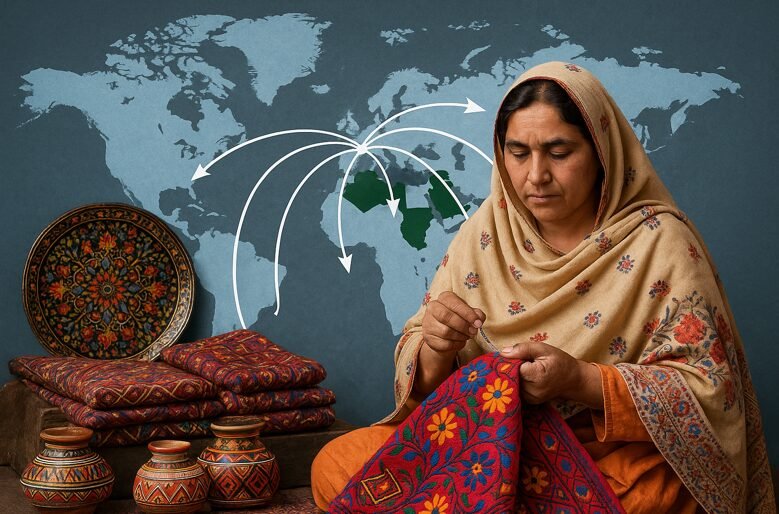
Pakistan’s handicraft industry represents the soul of its rich cultural heritage — a blend of artistry, tradition, and regional diversity. Over the years, these crafts have evolved from small-scale cottage industries into globally recognized symbols of creativity and craftsmanship. This article explores the fascinating journey of Pakistani handicrafts, their economic importance, and their growing demand in international markets.
1. The Legacy of Pakistani Handicrafts
Pakistan’s handicrafts trace their origins to centuries-old traditions rooted in the Indus Valley Civilization. Each region has its own distinct art form — from Sindh’s mirror embroidery and Punjab’s pottery to Balochistan’s handwoven rugs and Khyber Pakhtunkhwa’s wood carvings. These crafts reflect the unique stories, lifestyles, and beliefs of the people who create them.
The art of handcrafting was traditionally passed down through generations, making it not just a profession but a cultural inheritance. Today, these artisans continue to preserve techniques that have survived for hundreds of years.
2. The Role of Cottage Industries
Cottage industries form the backbone of Pakistan’s handicraft sector. These small, home-based businesses empower local communities, particularly women, by providing sustainable employment opportunities. Rural women across Sindh, Punjab, and Gilgit-Baltistan produce embroidery, jewelry, and textile products that not only support their households but also promote regional craftsmanship.
Government and non-government organizations have also launched initiatives to provide training, marketing support, and access to microfinance, helping these artisans connect with broader markets.
3. Handicrafts Entering the Global Marketplace
With globalization and digital commerce, Pakistani handicrafts have found new life on international platforms like Etsy, Amazon Handmade, and eBay. Buyers from Europe, the Middle East, and North America are increasingly drawn to the authenticity and uniqueness of Pakistani handmade goods.
Exports of items such as Ajrak, handwoven shawls, camel skin lamps, brassware, and pottery are on the rise. International exhibitions and trade fairs have further boosted Pakistan’s reputation as a hub of skilled craftsmanship.
According to the Trade Development Authority of Pakistan (TDAP), the export potential of handicrafts can grow significantly with proper branding, quality assurance, and online marketing.
4. Challenges Faced by the Handicraft Sector
Despite its vast potential, the handicraft industry faces challenges such as lack of infrastructure, inconsistent quality standards, and limited international exposure. Artisans often struggle with middlemen taking unfair profits, leaving little for the creators themselves.
Modernization also poses a cultural challenge — machine-made products threaten to overshadow traditional handcrafting techniques. To sustain this sector, Pakistan must focus on digital marketing, skill training, and fair-trade certification to ensure artisans receive the recognition and income they deserve.
5. The of Pakistani Handicrafts
The future of Pakistani handicrafts lies in innovation and global visibility. Integrating modern design trends with traditional craftsmanship can attract younger buyers worldwide. Platforms such as Instagram, Pinterest, and Shopify offer artisans direct access to customers, enabling them to tell their stories and showcase their work to a global audience.
If supported through sustainable policies, training programs, and e-commerce facilitation, the handicraft industry could become a major contributor to Pakistan’s exports and cultural diplomacy.
Conclusion
From humble cottage workshops to international galleries, Pakistani handicrafts symbolize a bridge between the past and the present — preserving heritage while embracing modern opportunity. With the right mix of innovation, empowerment, and global marketing, Pakistan’s artisans have the potential to transform their craft into a thriving export industry that proudly represents the nation’s cultural identity.


